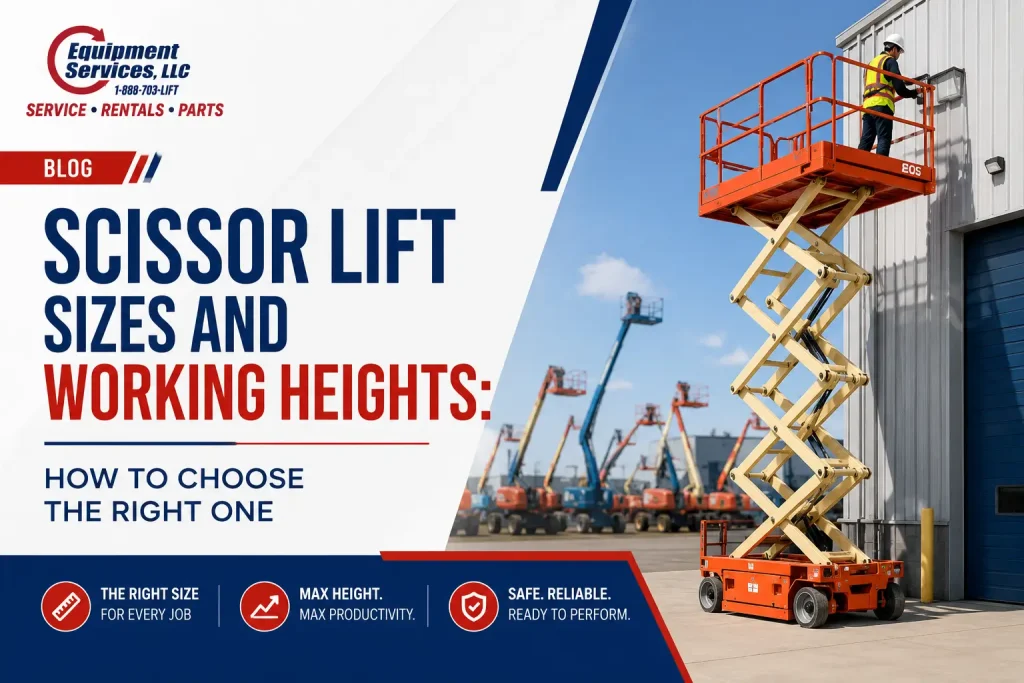
Scissor Lift Sizes and Working Heights: How to Choose the Right One
Choosing the incorrect size of the scissor lift can be a costly mistake. Too small a lift won't reach your work area, which means delays and a re-rental. Too big a lift costs more to rent, won't fit through doorways, and struggles in tight rooms. This guide explains how to pair the most common scissor lift sizes with the appropriate platform heights and working heights for jobs both inside, outside, and between.
- Daniel Hagerman
- August 18, 2026
- 7:03 am
What Size Scissor Lift Do I Need?
Indoor construction 19–26-foot electric scissor lift models are the most typical because they fit in the standard doorways, run on smooth floors, and do not emit any emissions.
Outdoor construction will need 32′-to-53′-foot rough-terrain scissor lifts for increased reach, base width and stability on uneven surfaces. In general: choose your lift according to working height (not platform height), platform capacity, working environment, and space for handling.
Platform Height vs. Working Height
This is the single most confusing part of scissor lift sizing, and it trips up almost every first-time renter.
- Platform height is the height of the lift's platform floor when fully raised.
- Working height is the total height of the platform plus the height that a worker can reach standing on the platform (which is usually platform height plus an average person's arm length when extended, or about 6 feet).
Lifts are the product of manufacturers by platform height, but jobs are typically described in working height (e.g., “I need to reach a 30′ ceiling”). The most common mistake people make when renting is mixing them up, this is why it is so important they are correctly sized.
Common Scissor Lift Sizes
19 Foot Scissor Lifts
The most commonly used size for indoor use. Easy to maneuver around, it has a tight turning radius for warehouses, retail buildouts, and general maintenance and fits through most standard doorways.
- Best for: Light electrical/HVAC jobs, retail fixture installation, indoor ceiling jobs.
- Environment: Indoor, smooth flat surfaces
- Capacity: 1–2 workers plus tools can operate it effectively
- Typical users: Electricians, facility maintenance staff, and retail contractors.
- Advantage: Narrow footprint, easy to maneuver in aisles and around fixtures.
26 Foot Scissor Lifts
A step up in reach while still fitting through most doorways (some models require wider openings; always check specs before committing). This is the workhorse size for commercial indoor projects.
- Best for: Warehouse racking, ceiling mounting, signage & higher retail areas.
- Environment: Smooth pavement, indoor, occasionally light outdoor use.
- Capacity: Slightly more platform capacity than 19 ft models.
- Typical users: Commercial, sign, warehouse staff and workers.
- Advantage: Excellent reach and indoor handling qualities.
32 Foot Scissor Lifts
Where indoor and outdoor use starts to split. Some 32 ft models are electric (indoor), others are rough terrain (outdoor).
- Best for: High-bay warehouse lighting, mezzanine work, exterior building work.
- Environment: Both, depending on model.
- Capacity: Higher platform capacity, often supports 2+ workers.
- Typical users: Industrial maintenance crews, general contractors.
- Advantage: Extended reach without moving into the largest rough terrain category.
40 Foot Scissor Lifts
Almost exclusively rough terrain, built for outdoor jobsites with uneven ground.
- Best for: Exterior painting, siding, roofline work, steel erection support.
- Environment: Outdoor, uneven or unpaved ground.
- Capacity: High platform capacity, larger deck size.
- Typical users: Construction contractors, painters, building envelope crews.
- Advantage: Diesel power and 4WD for stability on rough sites.
50+ Foot Scissor Lifts
The largest common category, used for major construction and industrial projects.
- Best for: Steel construction, large-scale exterior work, industrial builds.
- Environment: Outdoor, rough terrain.
- Capacity: Largest deck size and highest platform capacity.
- Typical users: Heavy construction crews, industrial contractors.
- Advantage: Maximum height and load capacity for demanding jobsites .
Electric vs. Rough Terrain Scissor Lifts
Electric scissor lifts are quieter, produce no emissions, and won’t mark floors — ideal for occupied indoor spaces. Rough terrain models trade that convenience for the power, ground clearance, and stability needed outdoors.
Which Size Is Right for Your Job?
Factors That Affect Size Selection
- Working height: the actual reach you need, not just platform height
- Platform capacity: total weight of workers, tools, and materials
- Door width: narrow doorways rule out larger models
- Indoor vs. Outdoor: determines electric vs. rough terrain
- Ground condition: flat concrete vs. gravel, dirt, or slopes
- Power source: electric, diesel, or hybrid
- Weight restrictions: some indoor floors (mezzanines, upper levels) have load limits
- Turning radius: how tight the space is to maneuver in
- Lift dimensions: width, length, and stowed height for transport
- Storage: where the lift will be kept between uses
Common Mistakes When Choosing a Scissor Lift
- Choosing platform height instead of working height: the most frequent error
- Ignoring weight capacity: forgetting to account for tools and materials, not just the worker
- Ignoring doorway clearance: the lift arrives and doesn't fit through the entrance
- Ignoring floor load limits: especially on upper floors or mezzanines
- Ignoring terrain: bringing an electric lift to an unpaved outdoor site
- Renting bigger than necessary: paying more for height and capacity you don't need
Scissor Lift Dimensions
They’ll vary depending on manufacturer and model; always verify exact specifications of any rented item before hiring, particularly when it comes to jobs that involve doorway or floor loading.
Indoor vs. Outdoor Use
Rental Cost by Size
Even though this guide is about sizing, cost is usually the next question. As a rough guide:
Rates vary significantly by region, rental duration, and provider. For a detailed breakdown, see our full guide on Scissor Lift Rental Cost.
Safety Considerations
- Never exceed the rated working height or platform capacity
- Keep guardrails up and always locked while elevated
- Use a harness where required by site policy or local regulation
- Avoid operating on slopes beyond the manufacturer's rated limit
- Check wind speed ratings before outdoor use, especially at greater heights
- Inspect the lift before every use: control, tires, guardrails, and hydraulics
Buying vs. Renting
Rent when you need a lift every now and then for short-term projects or to match the size of the lift to the size of each project without storage or maintenance expense.
Buy when you are using a lift frequently (daily or weekly), have storage, and do not wish to have to pay rentals again in the long-term. Also ownership involves your responsibility for maintenance, inspection and depreciation.
How to Measure Your Required Working Height
A simple three-step calculation:
- Measure the height of the ceiling or work area (e.g., 24 ft)
- Add average worker reach with arms extended (approx. 6 ft)
- That total is your required working height (24 + 6 = 30 ft working height, which points you to a 26 ft platform lift)
Working backward from working height to platform height is the fastest way to avoid renting the wrong size.
Not sure which lift fits your site? Our team will match the machine to the job before you rent.
Frequently Asked Questions
The 19 ft and 26 ft electric models are the most commonly rented, mainly for indoor commercial and warehouse work.
Working height is typically platform height plus about 6 feet, accounting for a worker’s reach with arms extended.
Platform height is the height of the deck itself; working height is how high a worker on that deck can actually reach.
Most 19 ft scissor lifts are built to fit through standard 36-inch doorways, but this varies by manufacturer — always confirm before renting.

About Daniel Hagerman
Daniel Hagerman writes about equipment rentals, machine selection, and rental costs for EQS LLC, including the Rental guides.